PART II – FROM BELONGING TO DIVISION
Question 5
The astonishing ease of creating “us” and “them”
Humans do not only cooperate. We also sort ourselves into groups — often with remarkable speed, and sometimes for surprisingly trivial reasons.
How does a category become a tribe?
A football shirt, a school, a profession, a political party or a nation can become part of who we are.
Once that happens, the people inside the boundary may begin to feel more familiar, more trustworthy, more deserving — simply because they are “one of us.”
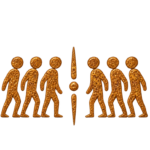
Belonging can change perception.
But group identity does not automatically produce hatred. People can feel strong loyalty to an in-group without despising outsiders, and we can belong to many overlapping groups at once.
The important question is what happens next.
For Beyond Tribes, this raises a central problem:
When does ordinary belonging remain harmless, and when does “us” begin to require a “them”?
The questions we want to explore
- How easily can people be made to favour an in-group?
- Why do belonging, self-esteem and meaning become attached to group identity?
- Does stronger loyalty to “us” necessarily produce hostility toward “them”?
- Can multiple overlapping identities protect us from tribal division?
- Why can political or national identities become emotionally stronger than the actual issues they represent?
- What additional ingredients turn simple categorisation into discrimination, dehumanisation or conflict?

The boundary between “us” and “them” can begin as little more than a label. The question is what makes that boundary start to matter.