PART V – WHAT CAN CHANGE?
Question 17
Can democracy scale beyond the nation?
We govern a deeply connected planet through nearly two hundred separate states. Yet climate, war, inequality, pandemics, technology and the global economy routinely cross their borders.
Could humanity ever govern itself democratically as a whole?
That need not mean abolishing countries or creating one all-powerful world state. Local communities could retain enormous autonomy while genuinely global decisions were made at a genuinely global level.
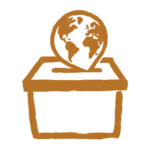
The ambition would be government at the scale of the problem.
Imagine institutions democratically accountable to humanity rather than primarily to governments: constrained by human rights, informed by science and evidence, concerned with wellbeing and equality, and required to operate within ecological limits.
That is an attractive ideal. It is also potentially dangerous.
Who decides what counts as evidence? How are minorities protected? How do billions of people with different languages, cultures and values share political authority? And how do we prevent planetary government from becoming planetary tyranny?
For Beyond Tribes, the question is therefore larger than reforming the UN:
Could we build democratic institutions capable of governing our shared planet without creating a power too large to control?
The questions we want to explore
- Which decisions should actually be made at the global level?
- Could every human ultimately have an equal democratic voice in those decisions?
- How could science inform policy without becoming technocracy?
- How would poorer countries, minorities and local communities retain meaningful power?
- Could planetary institutions guarantee basic welfare while respecting different ways of life?
- How could global authority remain accountable — and removable — if it became corrupt?
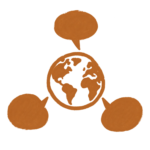
Perhaps the destination is neither competing nation-states nor a single world state, but democracy organised at every scale at which our problems actually exist.